Blog
-
Local (ccTLD) vs Global(gTLD) Domain Names: How They Affect SEO Rankings
The domain extension of your website can affect how your site is seen by search engines.
What is the difference between a global domain and a country-specific domain?
TLD stands for top level domain. This is the .com, .org, .co.zw etc part of your website name. Country specific TLDs contain country codes at the end, e.g .co.zw, .co.uk, .ca, .co.za etc. Global TLD are deemed international and broad e.g .com, .org, .net, .edu.
How Domain TLD Affect SEO Rankings
When it comes to choosing your domain extension you have to consider the target market. Are you targeting a local audience or everyone around the globe?
Benefits of Country-code TLD
When targeting local people its best to go for ccTLDs because what happens is this
Every time someone searches Google first tries to find websites within your proximity, area or country. If it fails to find any it expands its area of reach to other countries.
Local domain names are easy to rank as they compete less with big authority websites. With global domains you’ll most likely have to find more backlinks to build authority.
In addition, visitors are more likely to convert/ buy on a ccTLD tha gTLD. A Zimbabwean visitor will know that .co.zw is specific to his/her needs than .net or .org.
Disadvantage of Country-code TLD
Despite the benefits country-code domain names have limited search reach compared to global TLDs. When someone searches far away from your country Google will less likely show your results.
Now this is not always true. They are some underlying factors that can cause a webpage not show in some SERPs. Domain authority and type of search intent can cause one website to appear in search results despite having a ccTLD or not.
For example, commercial search intents like “price for” may result in more country-specific websites as Google knows that people usually buy locally. An informational search may show mixed websites (ccTLD or gTLD) depending on authority and relevancy.
-
How To Rank Without Backlinks Using Long-tailed Keywords
Let’s face it, backlinks can be a beast to build. Failed outreaches, ignored DMs, link buying and many schemes just to get that link.
Backlinks can be a total game changer. One quality link from an authoritative site can work wonders for your site.
However, because of their value, they are one of the most manipulated SEO ranking factors. Link buying, PBNs and bot spamming are some of the shady ways people use to build backlinks.
Personally and honestly, I have had no success building links since I started SEO. I tried a few outreaches and it didn’t work out.
If you’re a person who doesn’t like building backlinks then this article is for you because I’m going to show you how to get decent and targeted traffic to your website without backlinks.
Research
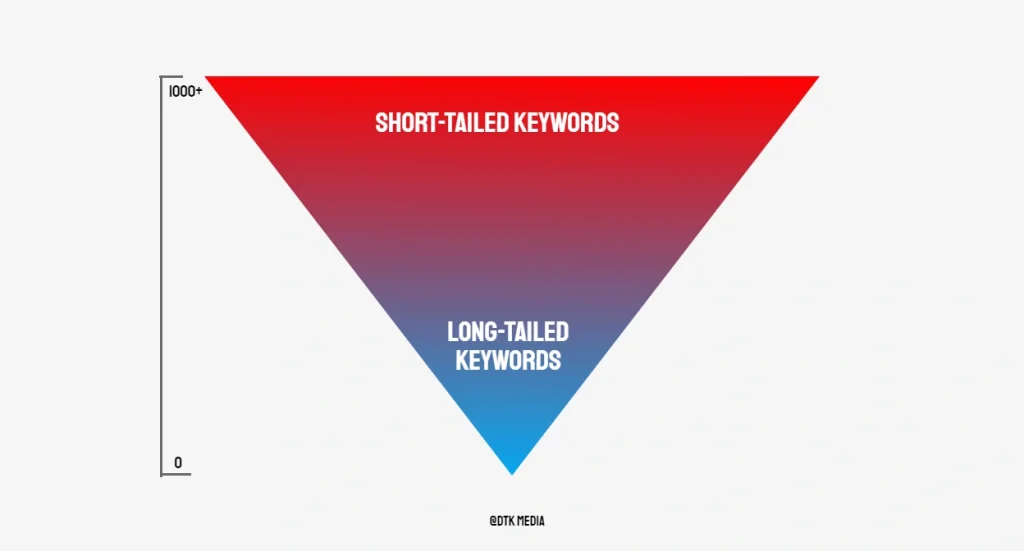
Everyone wants to get to the top for big, short-term keywords but it can be a challenge. Short-term keywords are words like shoes, construction, laptop, phone etc.
These keywords will be occupied by big websites like Wikipedia, Amazon, Tech crunch etc.
So what are you gonna do?
Instead of targeting loose, broad keywords in the red area try to be as specific as possible and target keywords in the blue region. Search pages still contain several specific unanswered questions.
Specific keywords are termed long-tailed keywords because they are narrowed. They may have low search volumes but they will be easy to rank for and get targeted traffic.
This search query from one of my website shows how people can be deep when searching

Long tailed, specific searches How to Find Long-tailed Keywords
In the SERPs
When you search for something on Google/Bing look in the “People Also Ask* section. In there you’ll discover some long-tailed questions that people are asking. Try creating content answering those questions.
Get In Forums
When people fail to find answers on Google they tend to ask in forums. If you search something and notice several user-generated websites like Quora and Reddit it’s a sign that the question is specific.
Websites like Quora usually show up for long-tailed specific queries. Try to answer these questions in articles and blog posts.
Use Keyword Research Tools
Tools like Ahrefs, Semrush and Ubbersuggest offer keyword research capabilities. You can filter to show question-related queries. Look for keywords with a low difficulty score and decent search volume and create content around those.
Social Media
Like forums, get into social media groups observe what people are asking and create content answering those questions.
Analyse what people are searching on your website
If you have a couple of people on your site put a search input and record their input to a file on your server. Notice their search inputs and discover long-tailed keywords that you can write content on.

User searches from search inputs Create a Forum on Your Website
User-generated content is specific and narrowed. Forums create long-tailed keywords automatically and rank for themselves. When people fail to find answers on Google they ask in forums and groups for answers.
Advantages of Long-Tailed Keywords
Long-tailed keywords are specific and usually attracts potential visitors. By potential I mean people who are likely to convert and become a regular visitor or customer. You may say I want more traffic by targeting broad keywords but only a few visitors convert or do what you want them to do, e.g. buying, signing up etc.
Which is better a website having 100 visitors and 5 people doing an action or 10 visitors with 5 people doing an action?
So high traffic numbers don’t necessarily mean high conversion rates.
Case Study
One of my websites, The Geo Room, managed to rank without backlinks. It’s an educational website and gets an average of 6000 visitors per month. I just focused on creating content. After 4 months one article stated to get traffic, about 4 – 6 per day. The article answered a long-tailed search query. Other long-tailed keyword articles also started getting traffic and the site grew from there.
As the website attracted backlinks from other websites naturally the domain authority also increased.
We can help you find Long-tailed keywords